Dots and Dashes: It’s Morse Code, of Course!

..  ..−. / -.−−   −−−   ..− / − .  .−.. .−.. / −  ….  . / −  .−.  ..−  −  …. / −.−−   −−−   ..− /−..   −−−   −.  − / ….  .−  …−  . / −   −−− / .−.  .   −−   .   −−   −…  .  .−. / .−  −.  −.−−  −  ….  ..  −.  −−.
Microphone

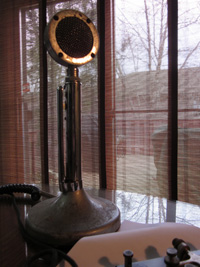
Ham Radio Microphone, circa 1938 (my collection)

That’s Morse code. I’ll let you decipher it.

Morse Code

Morse Code

Samuel Morse invented the code to use with the telegraph, which he and others invented in 1830s and 1840s.
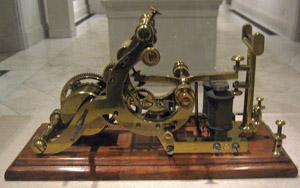
A Telegraphy Instrument

A Telegraphy Instrument

It’s really pretty amazing how, way before they could send a voice across the world, people could communicate with only the sound of dots and dashes.

They call the dots “dits” and the dashes “dahs” — words that don’t seem to make any sense until you say them aloud. The dits are short, dahs are lo-o-o-ong, just like the code looks.

.. − / ..  … / ..−.  ..−  −. / −   −−− / −…   . / ..  −. / −  ….  . / …  .−  −−  . / −..   .   −.−.   .−   −..   . / .−−   ..   −   …. / −.−−   −−−   ..−
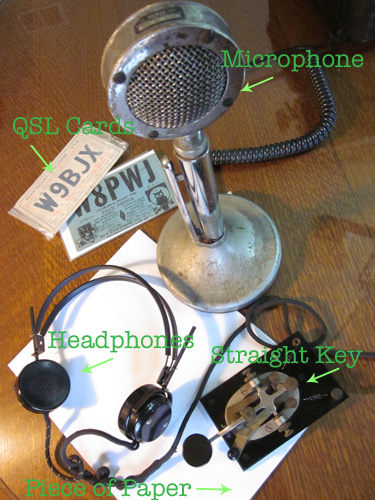
HamEquipment

My Collection of 1930s Ham Radio Equipment

In Radio Girl, T.K. Loomis is a ham radio and Morse code maniac. He’s like that kid you might know who is always on the computer or playing video games. The thing is, Teek has become so good at listening to Morse code messages that he doesn’t even need to write down the dots and dashes to translate what he hears. He just listens and understands.
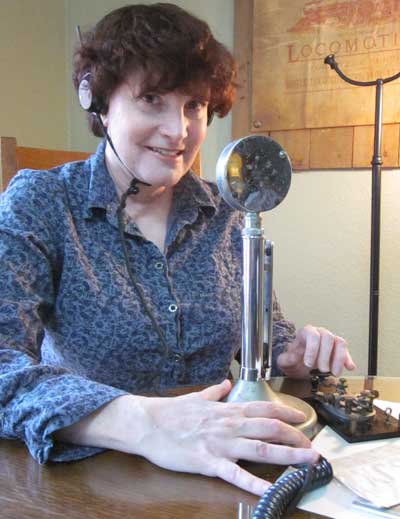
Pretending (I still don't have a transmitter or receiver)

Pretending (I still don’t have a transmitter or receiver)

Where did I get that idea? Well, it started when I found out that this guy I know named Henry is a ham radio fan. When I asked him to help me with the ham parts of the book, he offered up the story of his grandfather, a ham radio operator who, like T.K., was recruited by the U.S. Army because he knew Morse code by ear.
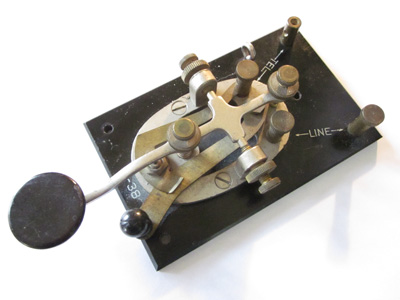
A Ham Radio Straight Key, Used for Sending Morse Code

A Ham Radio Straight Key, Used for Sending Morse Code

Perfect! Of course! I knew the minute I heard that story that T.K. would be a Morse code expert. Great little stories like this are everywhere, you know? So I stole borrowed Henry’s grandfather’s story and made it T.K.’s.

How to signal for help — S.O.S. — in Morse code: . . . __ __ __ . . .

Anyway, the world doesn’t use Morse code much anymore. But we earthlings still like talking to people all over the planet. I’d like to think that the thrill T.K. feels when he meets someone new from very far away through the airwaves hasn’t changed for most people even now, 75 years later.
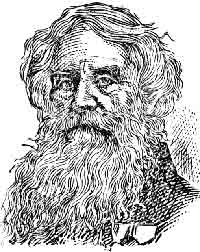
Samuel Morse, an illustration

Samuel Morse, an illustration

Isn’t it still pretty awesome that we can go online and converse with people half a planet away, people we haven’t met in person and may never meet face-to-face, all in a matter of seconds?

(Let me know if you need the answers to the coded sentences in this post. The sources of the quotes are Mark Twain and Franklin Roosevelt, respectively.)
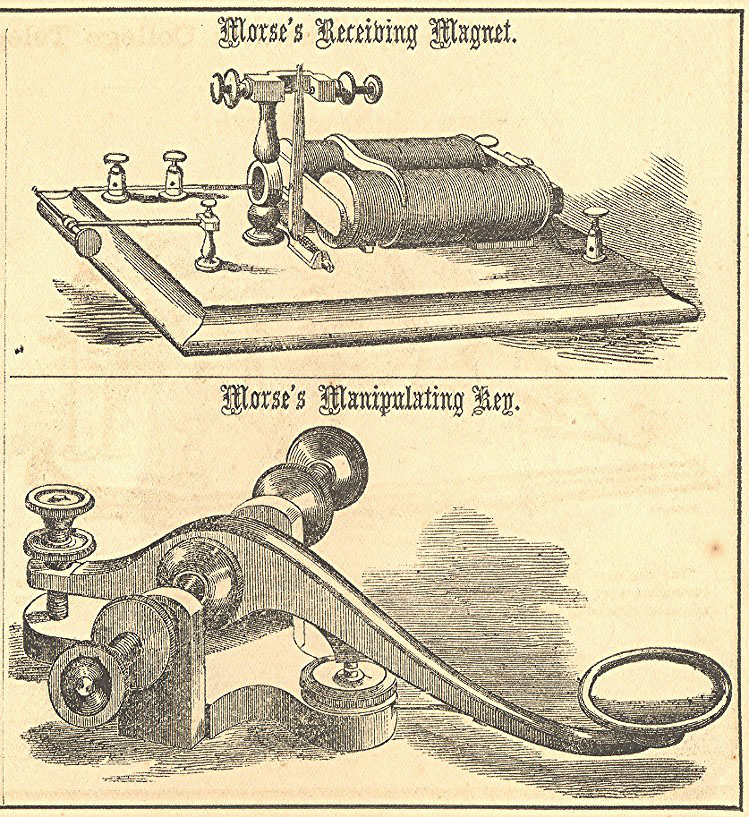
The Morse Invention

The Morse Invention

To learn more about Morse code, see Wikipedia on Morse.

To translate your own words into Morse code, try this translator. (link fixed!)

Faster than texting, hands down. See what I mean in this article.
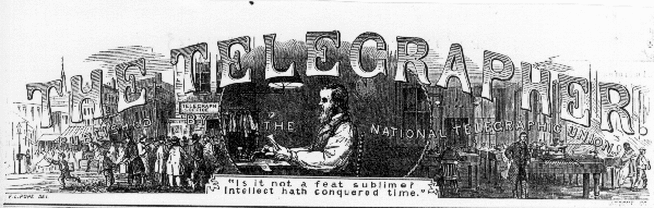
SublimeTelegraphy

The Quest for a Genuine Egg Cream

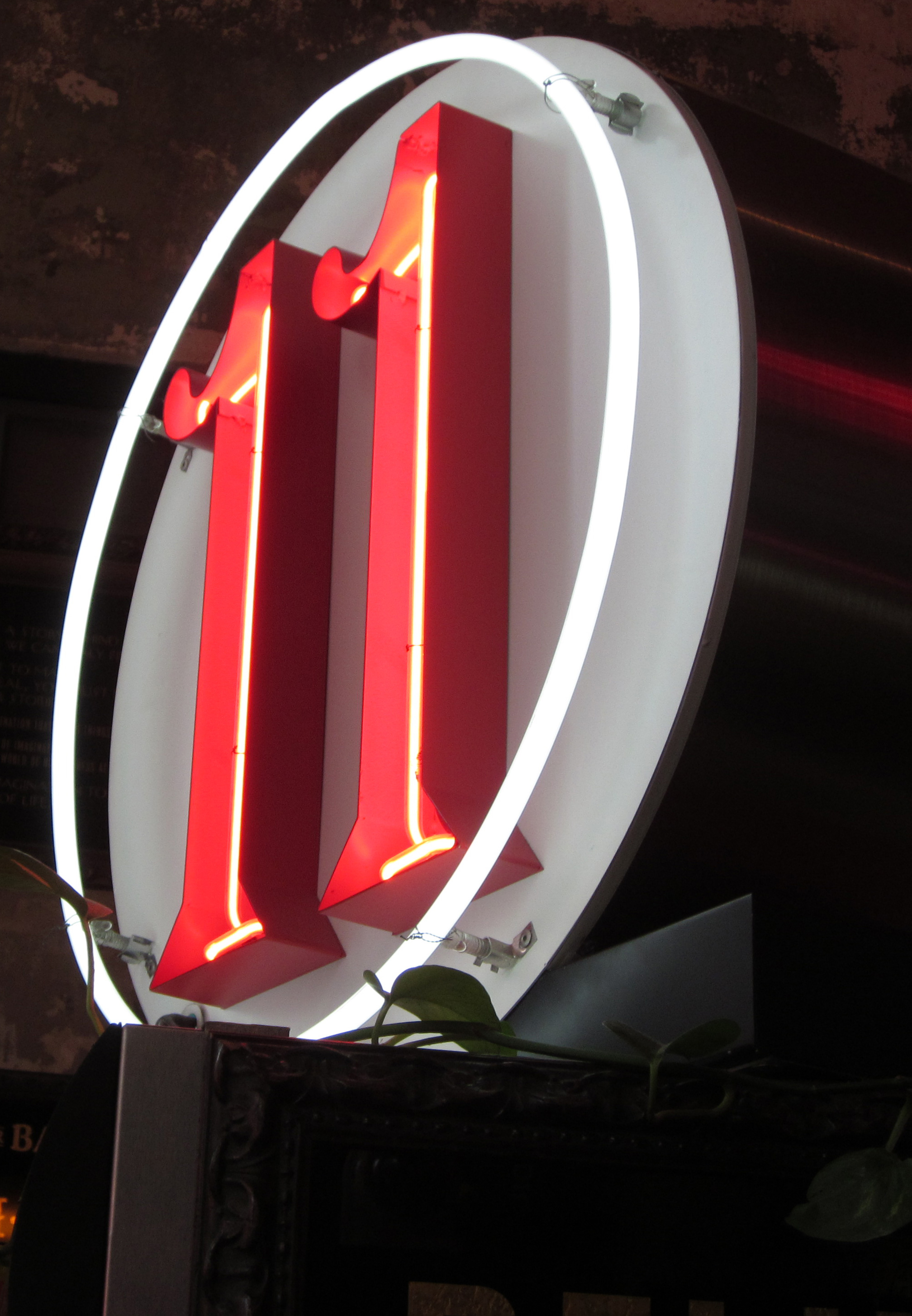
11Diner03

The Eleven City Diner at Wabash and 13th, Chicago

UBetLogoOld

The Real Deal

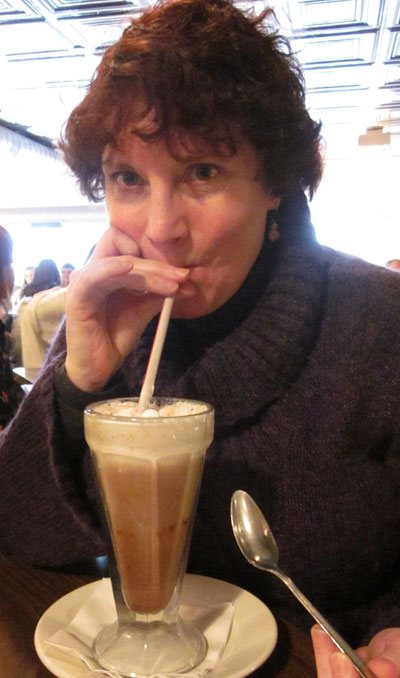
It’s a Brooklyn original, the egg cream. A soda fountain drink made with milk, seltzer water, and chocolate syrup, ideally with Fox’s U-Bet chocolate syrup. Cecelia, the main character in Radio Girl, loves them. Here in Chicagoland, an egg cream is hard to find. Chicago has its own legendary drinks and dishes, but the closest thing you can get to an egg cream is a drink called a chocolate phosphate. Yummy, but not the same. It’s made without milk. So what’s a girl to do when she wants the real deal? According to my research, there are at least three places in my area that make egg creams and I am determined to try them all. This post is the first in a series in which I document my Midwest egg cream quest.

11Diner01

The Eleven. There was a line to get in on Sunday afternoon.

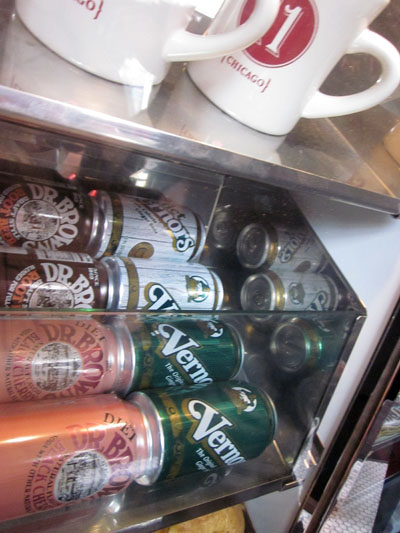
11DinerVernors

Vernors! They also had Faygo Rock’n’Rye and Green Rivers

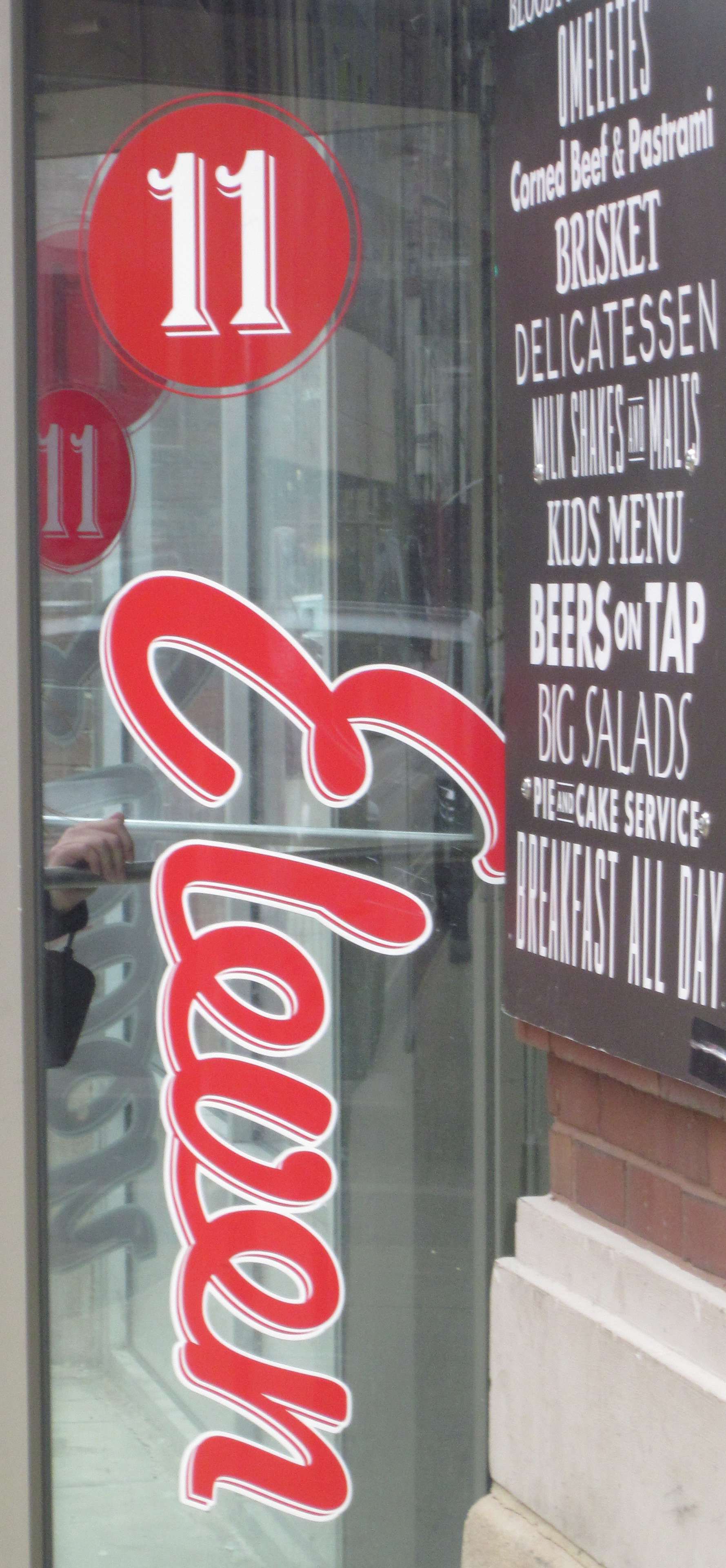
ElevenMenu

The Fare

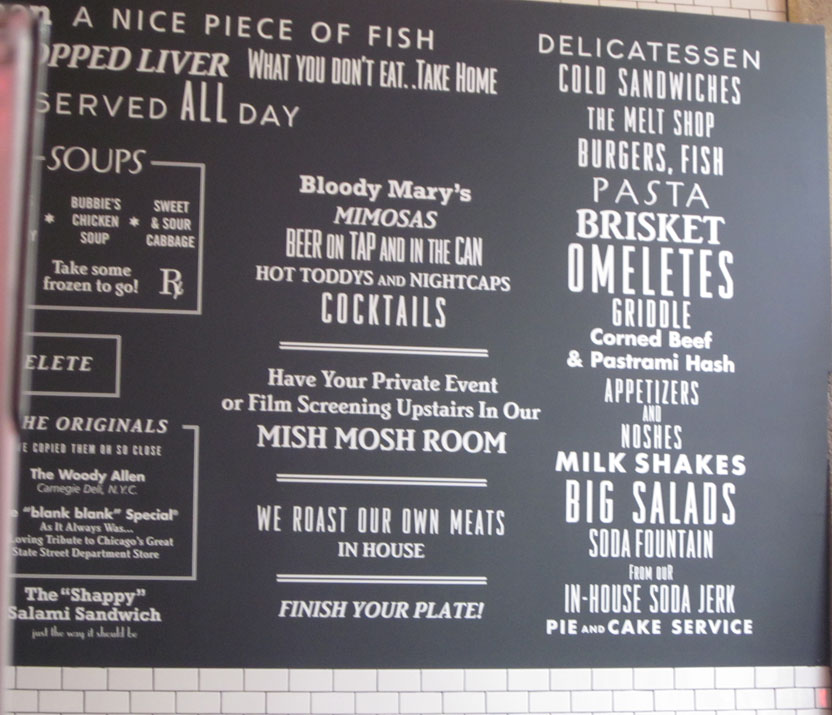
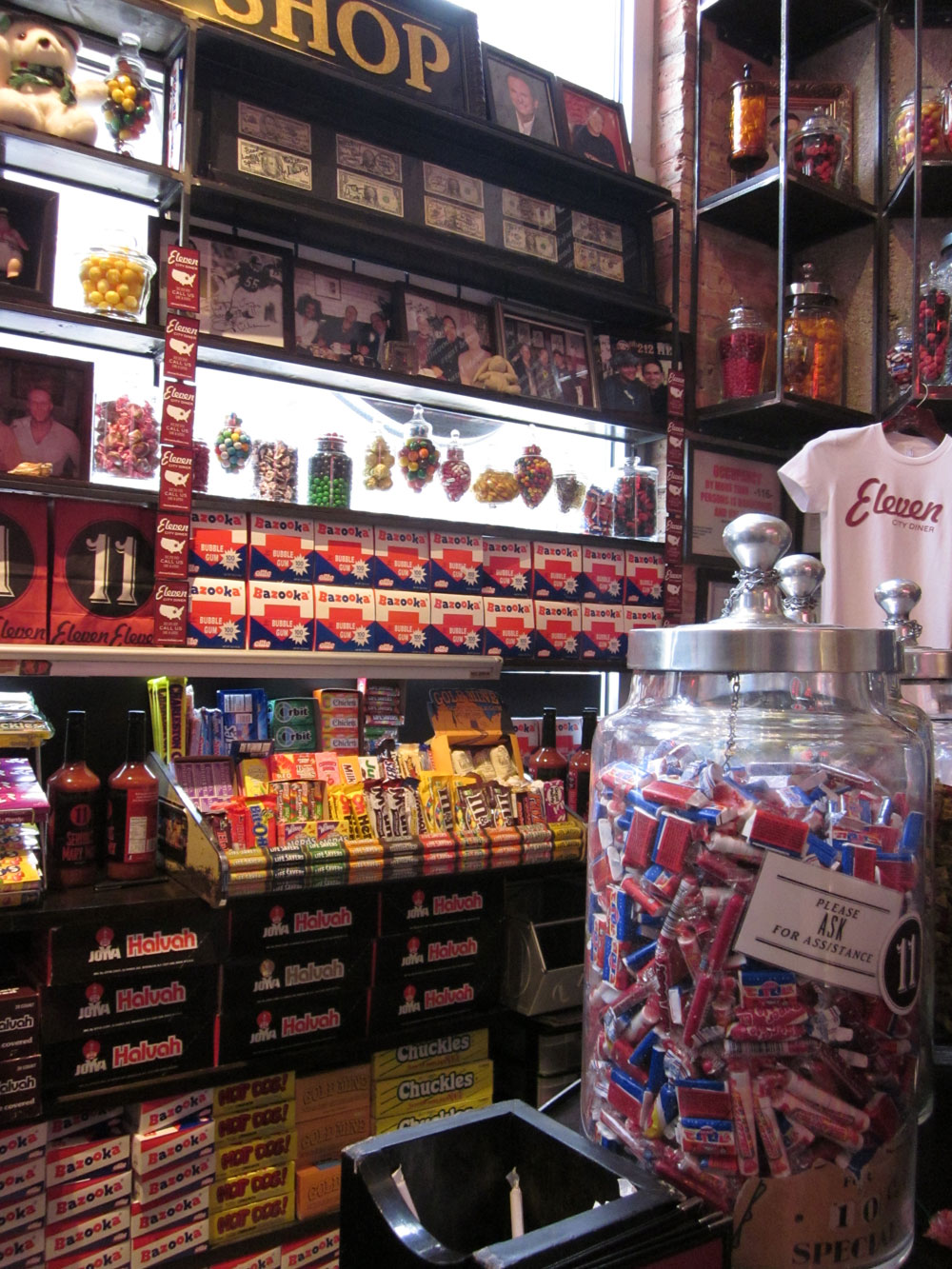
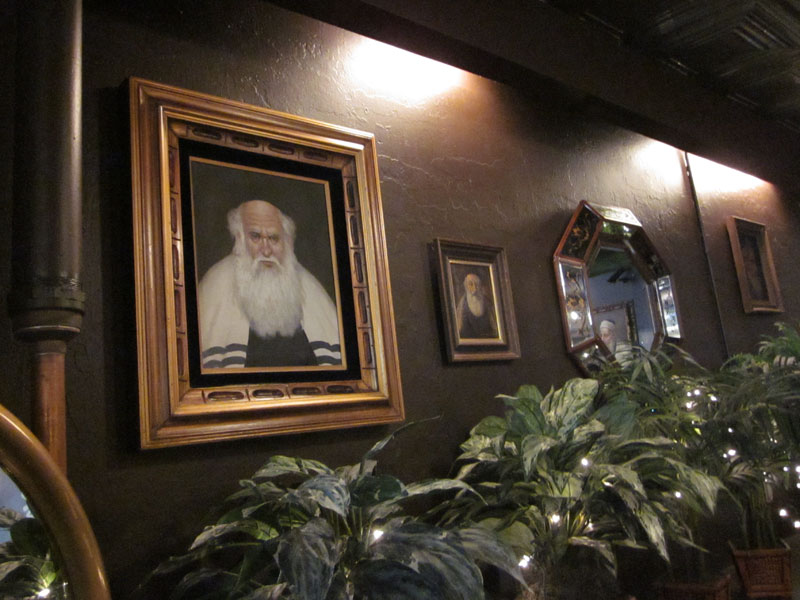
Last weekend I stopped at the Eleven Diner on Wabash in Chicago. This place is cool! Not only do they serve egg creams but they also have real kosher deli-style food AND two hard-to-find soda pop brands that I love: Vernors ginger ale and Faygo Rock ‘n’ Rye  If you grew up in Michigan, you know what I’m talking about. There’s a candy counter and paintings of somber rabbis line the walls.

Lots of Old Fashioned Candies!

Lots of Old Fashioned Candies!

The Upstairs Decor Was Magical!

The Upstairs Decor Was Magical!

So I ordered a corned beef on rye and what is purported to be a genuine Brooklyn-style egg cream. I don’t know for sure that it was made with Fox’s U-Bet chocolate syrup, but it was delicious! Heck, everything was delicious.

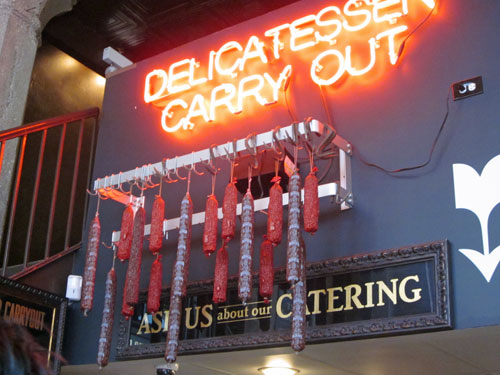
Deli Stuff

Deli Stuff

This place is going to be hard to beat. How about you? Ever had an egg cream? Ever been to the Eleven? Wanna go?

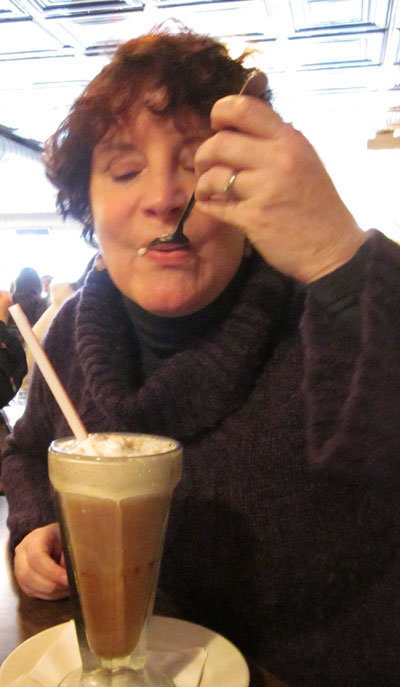
This Is Me.

Wouldn't Say No to Another.

Historical? Tell Me Another!

Image

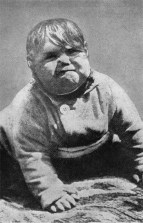
Baby Adolf?

When my debut novel comes out next year, it’s probably going to be categorized as historical fiction. Understandable. The story takes place in the 1930s so, yeah, it is historical. And I do love history, but history wasn’t the driving force behind my writing the book. Fiction was. And family.

Consider the photograph at left, supposedly a snapshot of Hitler as a baby. (Cute, ain’t he? Gads, no.) This photo was making the rounds back in the 1930s (way before anyone had heard of Photoshop or Internet memes, or WWII for that matter.) It’s a fake, of course. A fiction. It’s doctored. Were people fooled? Yes. Would you have been fooled?

OK, here’s a true confession: If I had been around in 1938 and had seen this photo, I would have been fooled, I just know it. ::blush:: As a kid, I thought the articles I read in my grandmother’s National Enquirer mags were 100% true. I know, I know–I was a doofushead, but I was under the impression that newspapers wouldn’t dare print lies. After all, that was against the law.

Well, folks, let me tell you, for this gullible girl the world was quite a strange and fascinating place, thanks to those far-out articles in the pages of the tabloids. Later, when I learned the truth about their fake stories and air-brushed photographs, I felt tricked and betrayed–and embarrassed–and I didn’t like that one bit. Consequently, as an adult, I’ve developed a sort of fascination for the ways in which people persuade, manipulate and fool others. I love a good hoax, just as long as I’m not caught up in it.Image

And that’s where my as-yet-untitled middle grade novel (Holiday House, Fall 2013) comes in. It’s the tale of a girl who sneaks off to work for a radio station with hopes of landing a role as an actress. When she finally finagles her way into the recording studio, she ends up becoming part of what some still call the greatest hoax ever unleashed upon the American public. Seventy-four years ago last week, thousands of radio listeners were misled by actor/director Orson Welles’s dramatization of H.G. Wells’s novel The War of the Worlds. True story. My father-in-law was one of them. While a young man living in Newark, New Jersey, in 1938, he was one of many CBS listeners on the Sunday night before Halloween who became convinced that Martians had invaded Earth and were marching toward Newark. Little green men were reportedly on a course heading directly for his family’s apartment on South Orange Avenue.  He panicked. Lots of people panicked.

Image

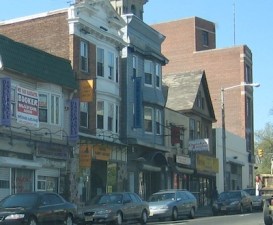
South Orange Ave., Newark, New Jersey in 2006. That’s my character’s building there, the gray one in the middle. 🙂

Orson Welles’s so-called “panic broadcast” of 1938 is an extreme example of what can happen when people believe an authoritative voice without question and react before having all the facts. I loved the War of the Worlds story as a young adult. When I found out later on that my own father-in-law had experienced it, I knew I had to write a story around this extraordinary event.

That’s what I set out to write–a story that hangs upon a true event in history. So, yeah, it’s historical. And it’s fiction. But it’s not historical fiction, not to me. It’s my way of exploring hoaxes and lies, belief and deception. And it’s my way of honoring my father-in-law, Henry Brendler, a great storyteller in his own right, who died in 2009 at age 91, when I was in the middle of working on this novel.

The panic broadcast wasn’t history or fiction to him–he had lived through it. Many of the details in the story come directly from his memories of Newark as a kid. I wish I could present him with a copy when it comes out. It’ll be 75 years after the fact. I think he would have enjoyed it–a slice of his true story, written as fiction.

As my character would say, “And how!” I can’t wait to hold the book in my hands. Thanks, Pop.