1938–What a Year! Part I: Shoes

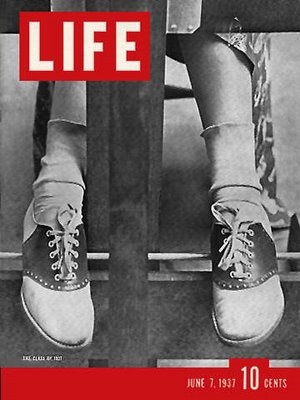
Cover of life. Magazine, 1937
Cover of life. Magazine, 1937

image

Shoes, c. 1938

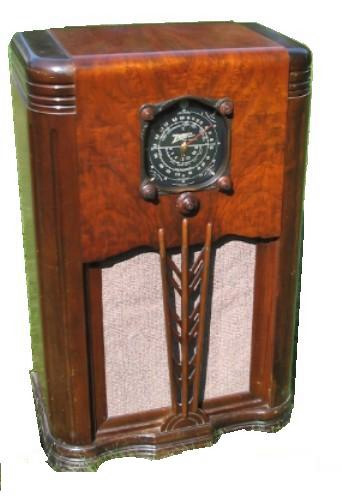
Radio Girl happens in 1938, when Americans were between the two World Wars and near the tail-end of the Great Depression (‘though of course they didn’t know that). There was a lot of turmoil in the world, like the rising aggression of a new Germany driven by their chancellor, this delusional guy named Adolph Hitler. You may have heard of him. Add to that the civil war in Spain, violence in China, and on and on. I think a lot of people, who could now learn bad news faster than ever before thanks to radio, lived with mixed feelings of anticipation and apprehension about the future.

Maybe that’s why teens embraced the pop culture of the time, the slang, swing music, movie star magazines, and the latest fashions. Which brings me to a topic I have an inordinately excessive interest in:  shoes of the 1930s.
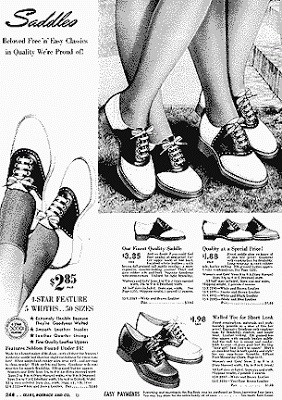
imageCecelia and most of the teens she knows (girls and boys) wore saddle shoes, like, all the time. These are lace-up, Oxford-style shoes with the center part made up in a contrasting color (the saddle) to the toe box and heel. They are usually white with black.  But they run the gamut when it comes to color combinations.

Saddle shoes were invented in the 1920s as an athletic shoe. I’m serious.

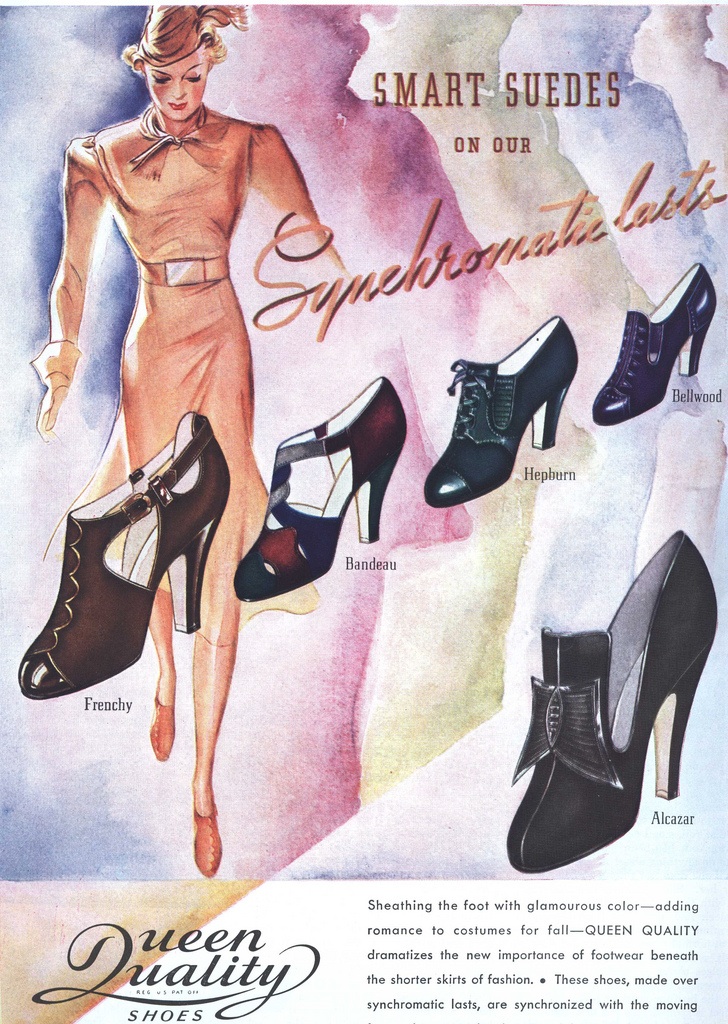
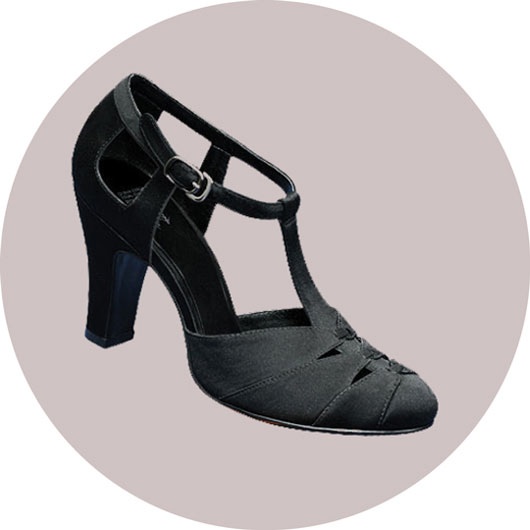
Anyway, when Cecelia wants to look older, she “borrows” Aunt Nory’s gray suede T-strap heels, which may have looked like this: image
image

Equally as popular with the male of the species.

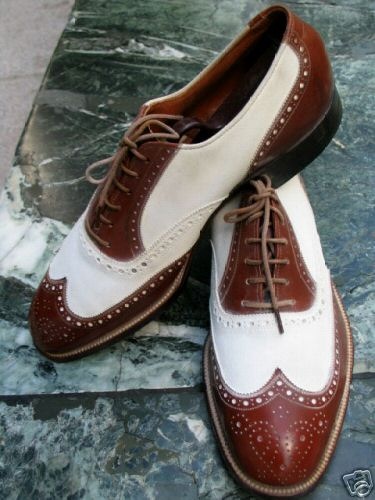
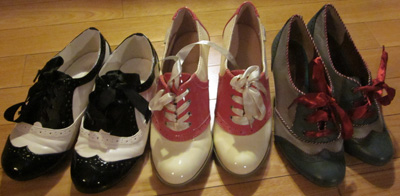
But my fave style from the era (and even earlier) is now and ever shall be the wing-tip spectator. They’re sometimes confused with saddle shoes, but they’re way different, doll. Note the distinctive point between instep and toe, the perforated border (called broguing) that make these honest-to-goodness wing-tip spectators and no other. imageDesigned for fashion-conscious men and women, and especially suitable for a night on the town or a day at the races. Keep ’em shined, fellas!

I’ve had a mania for spectators for a few years–and now, thanks to the fad-followers known as hipsters, who have recently embraced the style, I’m now able to actually find them for sale new! I own a pair. Okay, three. So far.MySpectators
Let me guess what you’re thinking: “Is there an “Adore” button on this blog?”
Historical? Tell Me Another!

Image

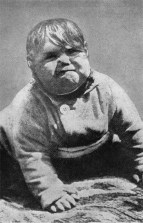
Baby Adolf?

When my debut novel comes out next year, it’s probably going to be categorized as historical fiction. Understandable. The story takes place in the 1930s so, yeah, it is historical. And I do love history, but history wasn’t the driving force behind my writing the book. Fiction was. And family.

Consider the photograph at left, supposedly a snapshot of Hitler as a baby. (Cute, ain’t he? Gads, no.) This photo was making the rounds back in the 1930s (way before anyone had heard of Photoshop or Internet memes, or WWII for that matter.) It’s a fake, of course. A fiction. It’s doctored. Were people fooled? Yes. Would you have been fooled?

OK, here’s a true confession: If I had been around in 1938 and had seen this photo, I would have been fooled, I just know it. ::blush:: As a kid, I thought the articles I read in my grandmother’s National Enquirer mags were 100% true. I know, I know–I was a doofushead, but I was under the impression that newspapers wouldn’t dare print lies. After all, that was against the law.

Well, folks, let me tell you, for this gullible girl the world was quite a strange and fascinating place, thanks to those far-out articles in the pages of the tabloids. Later, when I learned the truth about their fake stories and air-brushed photographs, I felt tricked and betrayed–and embarrassed–and I didn’t like that one bit. Consequently, as an adult, I’ve developed a sort of fascination for the ways in which people persuade, manipulate and fool others. I love a good hoax, just as long as I’m not caught up in it.Image

And that’s where my as-yet-untitled middle grade novel (Holiday House, Fall 2013) comes in. It’s the tale of a girl who sneaks off to work for a radio station with hopes of landing a role as an actress. When she finally finagles her way into the recording studio, she ends up becoming part of what some still call the greatest hoax ever unleashed upon the American public. Seventy-four years ago last week, thousands of radio listeners were misled by actor/director Orson Welles’s dramatization of H.G. Wells’s novel The War of the Worlds. True story. My father-in-law was one of them. While a young man living in Newark, New Jersey, in 1938, he was one of many CBS listeners on the Sunday night before Halloween who became convinced that Martians had invaded Earth and were marching toward Newark. Little green men were reportedly on a course heading directly for his family’s apartment on South Orange Avenue.  He panicked. Lots of people panicked.

Image

South Orange Ave., Newark, New Jersey in 2006. That’s my character’s building there, the gray one in the middle. 🙂

Orson Welles’s so-called “panic broadcast” of 1938 is an extreme example of what can happen when people believe an authoritative voice without question and react before having all the facts. I loved the War of the Worlds story as a young adult. When I found out later on that my own father-in-law had experienced it, I knew I had to write a story around this extraordinary event.

That’s what I set out to write–a story that hangs upon a true event in history. So, yeah, it’s historical. And it’s fiction. But it’s not historical fiction, not to me. It’s my way of exploring hoaxes and lies, belief and deception. And it’s my way of honoring my father-in-law, Henry Brendler, a great storyteller in his own right, who died in 2009 at age 91, when I was in the middle of working on this novel.

The panic broadcast wasn’t history or fiction to him–he had lived through it. Many of the details in the story come directly from his memories of Newark as a kid. I wish I could present him with a copy when it comes out. It’ll be 75 years after the fact. I think he would have enjoyed it–a slice of his true story, written as fiction.

As my character would say, “And how!” I can’t wait to hold the book in my hands. Thanks, Pop.